Circle’s OCC Bank Approval Leaves USDC Growth and Stablecoin Competition in Focus
Circle gained an important regulatory step through OCC national trust bank approval, yet Mizuho maintained a neutral view as USDC growth and stablecoin competition remain central to the investment case.
Partner picks
Relevant partner links for this story
A lightweight commerce block designed to add monetization without breaking reading flow.
This module may include affiliate links that earn a commission from qualifying purchases. Crypto Daily
Circle’s approval from the U.S. Office of the Comptroller of the Currency for national trust bank status is a meaningful regulatory step, but it does not remove the main questions surrounding the company’s business. Mizuho maintained a neutral view on Circle, as the investment case still depends more on whether USDC can regain growth momentum than on the approval itself.
The approval is important because national trust bank status could help Circle build stronger links with regulated financial infrastructure in the United States. It may also improve institutional confidence around the company’s operations. Still, the approval and USDC demand are separate issues. Circle’s business value is closely tied to USDC, and regulatory progress alone does not automatically reverse slower growth in the stablecoin.
The key measure remains qualitative rather than a new numerical target: USDC must show that its growth slowdown is easing. Circle’s flagship product is USDC, so market confidence depends on actual usage and demand. A positive regulatory event can reduce some uncertainty, but it does not fully address concerns about business performance while USDC growth remains weaker.
Competition in the stablecoin market is another major pressure point. USDC must compete with other stablecoins across distribution, use cases, and market position. As competition increases, Circle faces the dual challenge of restoring USDC growth and defending its existing standing. Stronger regulatory credibility may help, but broader adoption and demand remain more important.
Circle’s outlook now depends on whether the OCC approval can translate into stronger USDC growth. The approval may lower regulatory risk, but investors will need evidence that USDC demand is improving and that Circle can perform in a more competitive stablecoin market.
Key points
- Circle gained an important regulatory step through OCC national trust bank approval, yet Mizuho maintained a neutral view as USDC growth and stablecoin competition remain central to the investment case.
- Use the body and FAQ context before acting on this update.
- Compare with related issues inside the category hub.
FAQ
Why is Circle’s OCC approval important?
It is an important regulatory step that could strengthen Circle’s connection with U.S. financial infrastructure and improve institutional confidence.
Does the approval solve USDC’s growth slowdown?
No. The approval does not automatically increase USDC demand, and growth recovery remains the central issue for Circle.
Why did Mizuho maintain a neutral view on Circle?
Mizuho kept a neutral view because slowing USDC growth and rising stablecoin competition remain key risks despite the regulatory approval.
Latest stories
GoMining Unveils Bitcoin Payment SDK as It Challenges Square in Real-World BTC Payments
GoMining has released an SDK and programmable access for GoBTC Pay, a bitcoin payment protocol designed for merchant systems. The move targets real-world BTC use in stores, online shops, and apps, sharpening competition with Square in bitcoin payment tools.

Malta Weighs Bringing Parts of DeFi Under MiCA as Decentralization Spectrum Gains Focus
Malta's financial regulator is examining whether areas of DeFi with de facto managing parties can be brought into the MiCA regulatory framework. The core issue is treating decentralization as a spectrum, not as a binary condition. The discussion signals a possible widening of European crypto regulation and offers a reference point for Korean DeFi operators a

Dollar Index Nears Breakout as Bitcoin Volatility Rises in June 18 Market
On June 18, the Dollar Index approached a major technical breakout zone. Dollar strength usually weighs on Bitcoin and other risk assets. Korean won investors need to reflect both the dollar price of Bitcoin and exchange-rate movements. The short-term market is likely to depend on the dollar trend and whether Bitcoin can defend key support.
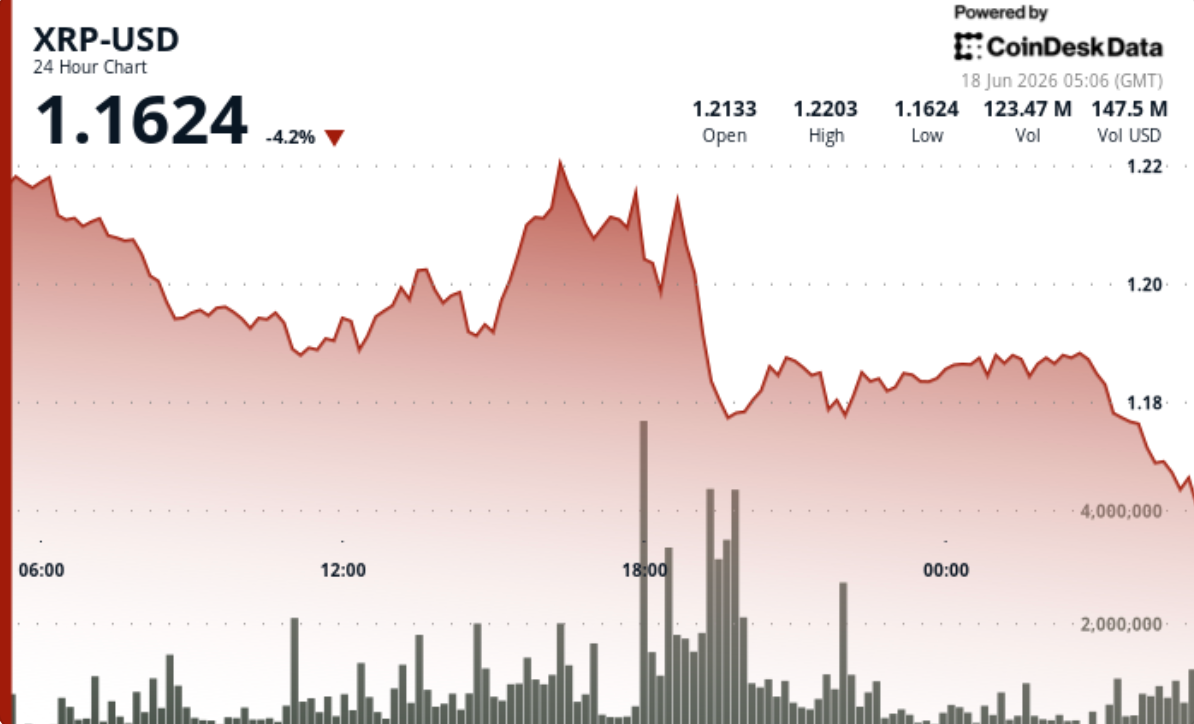
XRP Drops 4%, Falls Below $1.20 as Breakout Rally Pauses
XRP lost momentum near a key resistance area after its breakout rally and moved below $1.20. Strong selling pressure broke short-term support, but buying demand emerged above $1.17. The market is watching whether XRP can defend $1.17 and how quickly it can reclaim $1.20.